From first contact to payment
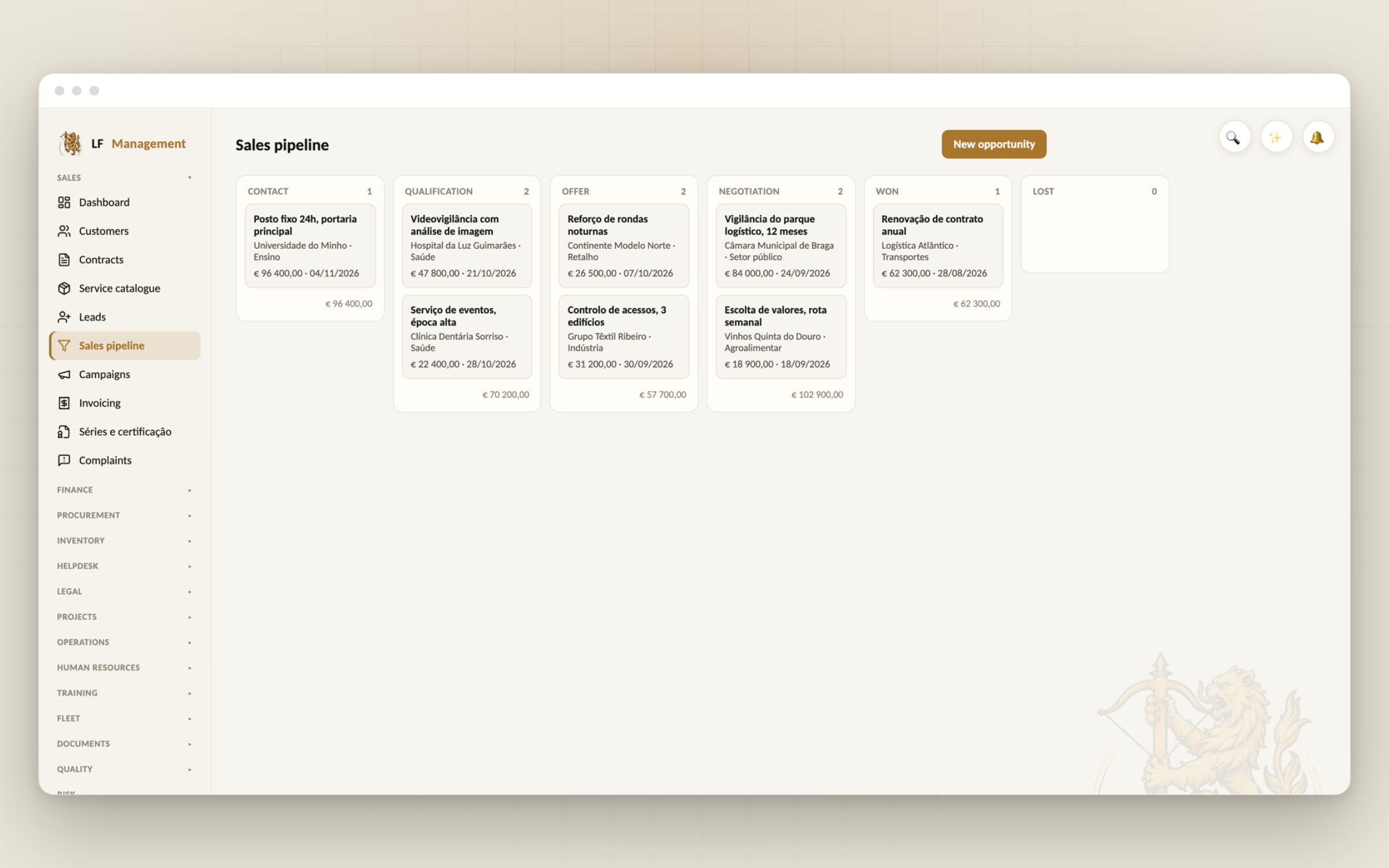
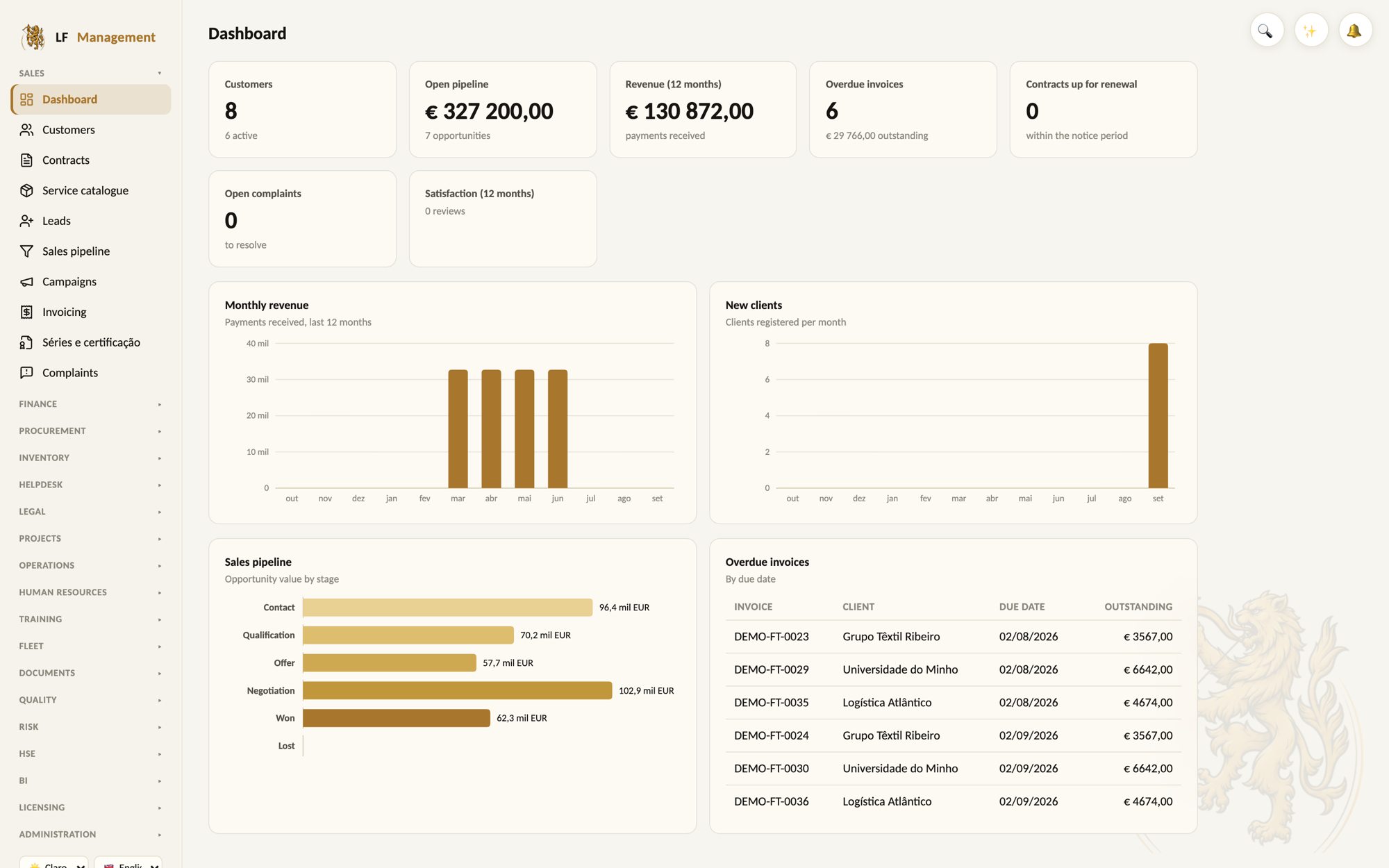
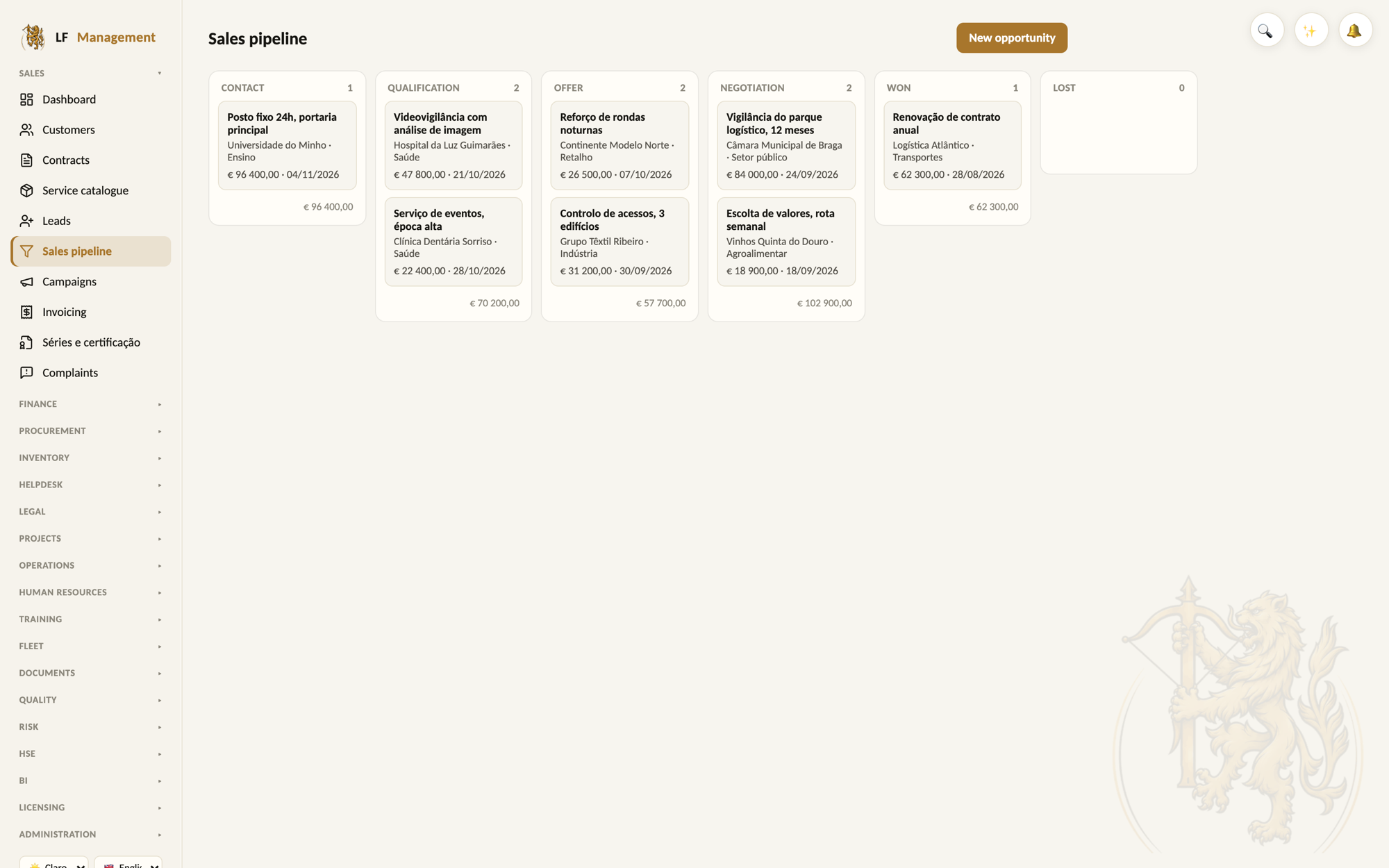
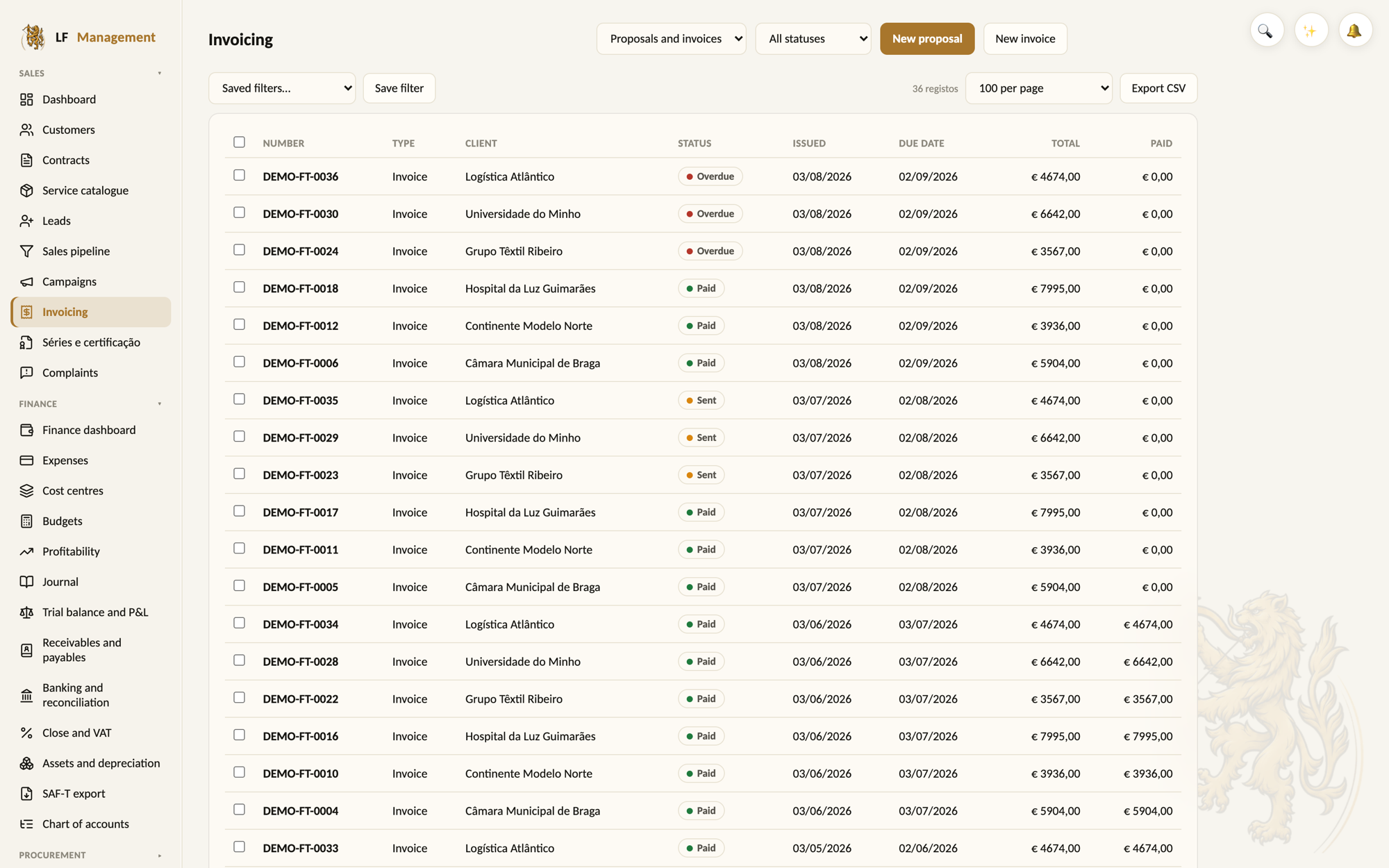
Manage customers, opportunities, proposals, contracts and invoices from a single workflow. Convert proposals into invoices with a single action.
Invoicing built for Portuguese requirements
Every invoice is signed and chained to the previous one within its series, with ATCUD and a QR code on the printout, following the Portuguese ordinances. Issued documents are immutable: they cannot be edited or deleted, only voided or corrected by credit note, and the chain can be cryptographically verified to detect tampering. Companies already issuing from certified software use the integration mode instead, which records those invoices and feeds the ledgers.
Double-entry accounting, not just reports
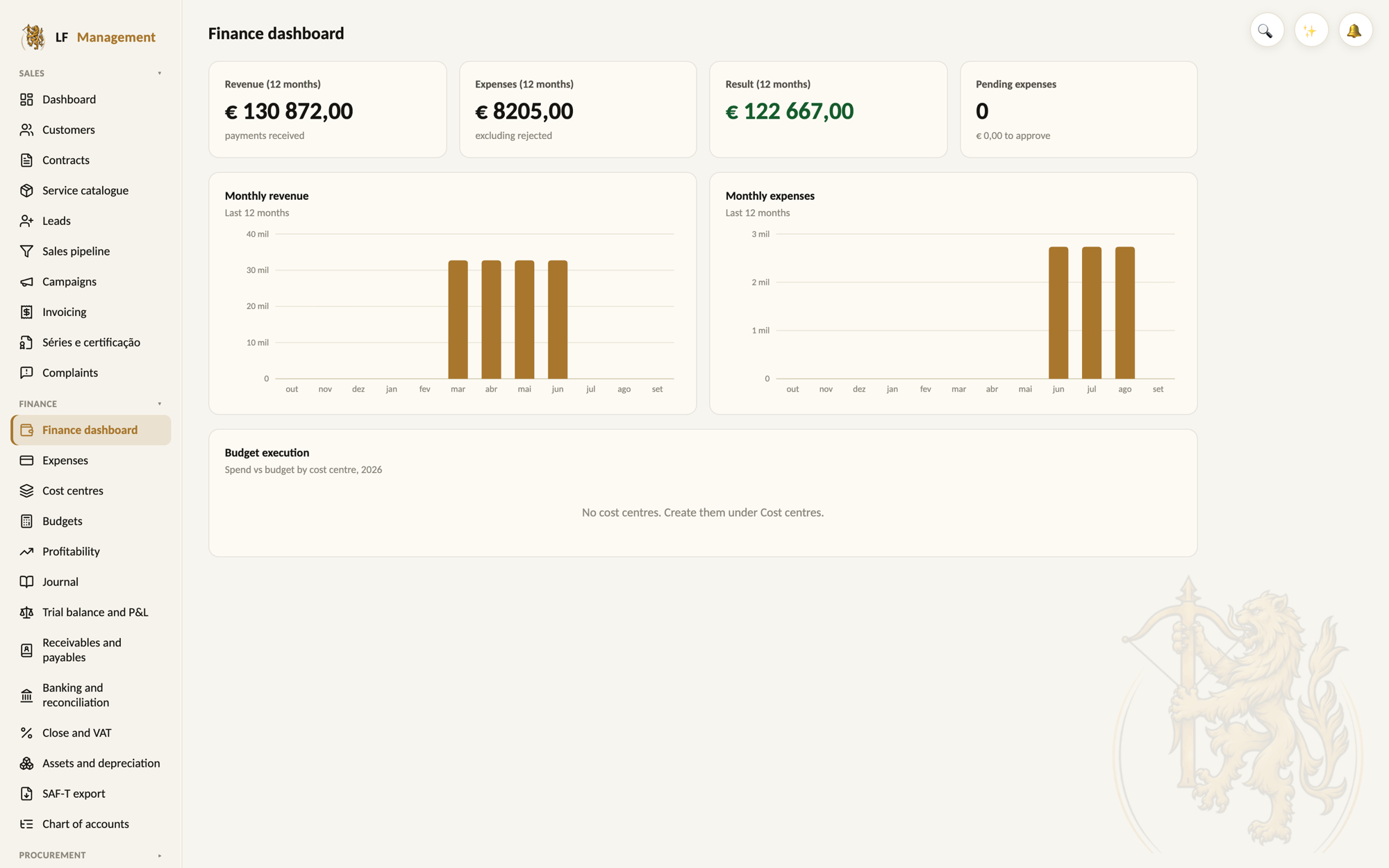
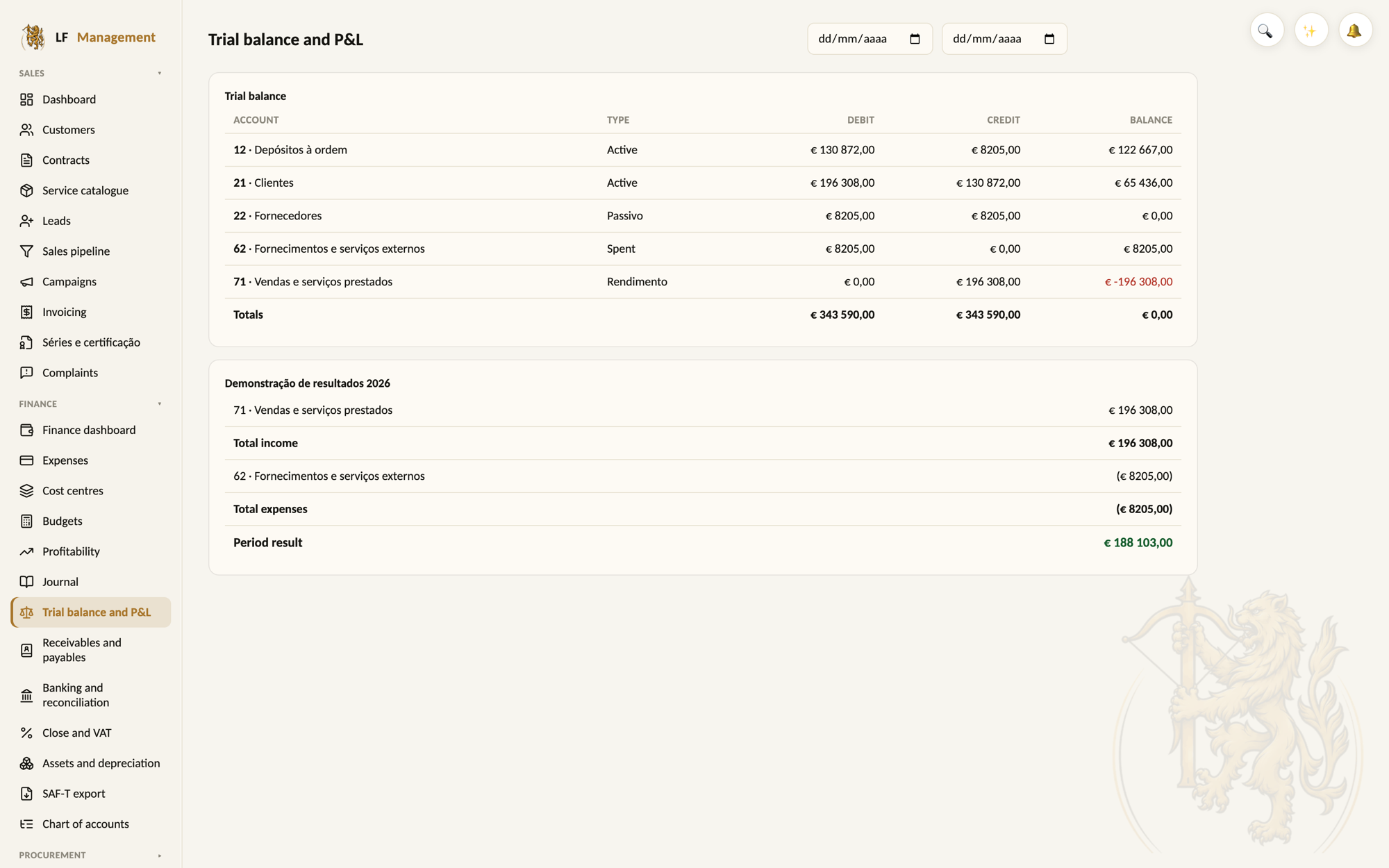
SNC chart of accounts, a journal with validated entries, automatic postings from invoices, receipts and expenses, trial balance, income statement, customer and supplier ledgers with ageing, bank reconciliation from CSV statements, period closing, VAT settlement, assets with depreciation and SAF-T (PT) export.
Human resources without spreadsheets
Employees, departments and teams, recruitment with a pipeline, a skills matrix, holidays and absences, attendance with a monthly map and time-clock import, and payroll with configurable items, a printable payslip and a close that posts to the accounts.
Portals for people outside management
The employee opens "My space" and handles shifts, holidays, overtime, payslips, certificates and field work without needing access to the modules. The client signs in with a code sent to their email and sees only their own contracts, invoices and requests.
A helpdesk with deadlines that hold
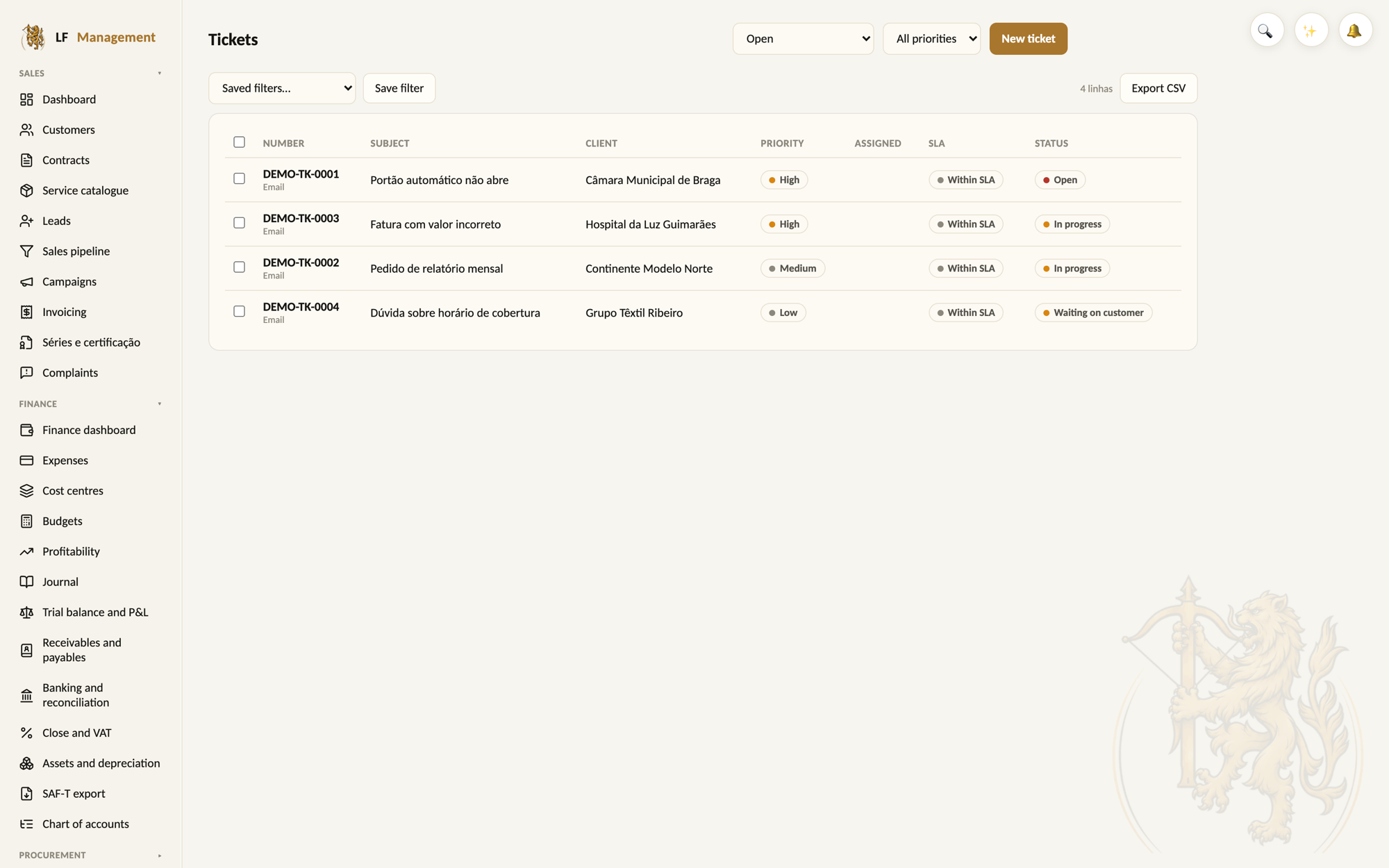
Tickets with SLA policies per priority, first-response and resolution deadlines calculated and recalculated when priority changes, client conversation kept apart from internal notes, and a daily check of what is at risk of breaching.
Procurement with approval tiers and budget checks
Suppliers, requisitions, multi-supplier quotation requests with comparison and a justified award, and purchase orders. Approval tiers block anyone below the value threshold, and the budget check prevents approving without funds in the cost centre, unless the excess is expressly accepted and recorded in the audit log.
Inventory, projects and fleet tied to the money
Warehouses, items with weighted average cost, movements validated against available stock and alerts below minimum. Projects with dependent tasks and timesheets carrying real cost per person. Vehicles with inspections, insurance, maintenance and cost per kilometre. It all lands in the cost centres and in profitability.
Built for security operations too
The sector pack adds a digital occurrence book per site, with immutable sequential entries, and patrol routes with checkpoints, point-by-point execution and an immediate warning to operations when something goes wrong.
Quality, risk and HSE that follow one another
Audits with scope and checklist that raise linked non-conformities, NCs with an owner, a deadline and daily escalation, inspections, and quality alerts that fire on their own. The risk dashboard aggregates what comes from serious NCs, audits, incidents and blown margins, always linked back to its source.
A data assistant and invoice reading
Ask in plain language and get the answer from the real data, limited to the modules you can access and recorded in the audit log. A photo or PDF of an invoice fills in the expense description, amount and date by itself.
Ways in and ways out
CSV importers for customers, suppliers, employees, items, sites and vehicles, with column mapping, a dry run that executes everything and rolls it back, and a line-by-line error report. On the other side, a public API by key and signed webhooks to connect the platform to the rest of your ecosystem.
Finding instead of searching
Global search across seventeen areas, filtered by the permissions of whoever is searching, and dynamic analytics that cross dimensions and metrics from seven data sources, with export and saved configurations.
Permissions that mirror your organization
Define access rights per user and per module: read-only, edit, or no access. A document signing circuit, custom fields, automations and print templates to shape the platform to the way you work.
A modular platform that grows with you
Activate the modules you need today and expand when the business requires it. No migrations, no data transfers, no rebuilding processes.
Enterprise-grade security
Two-factor authentication, role-based permissions and complete audit trails. Every action is recorded and every change is traceable. The central console shows who is logged in to any LF Software application, on what kind of device, and can end the session from a distance.